
 Call us:+91-484 2885910 (Reception Orthopedics; 9am to 5pm Mon-Sat), +91-484-2885621 (22,23,24)
Doctor's mobile - +91 9497559755 (whatsApp anytime)
Call us:+91-484 2885910 (Reception Orthopedics; 9am to 5pm Mon-Sat), +91-484-2885621 (22,23,24)
Doctor's mobile - +91 9497559755 (whatsApp anytime)
Restoring Cushion, Protecting Cartilage, Preserving Your Knee for the Future
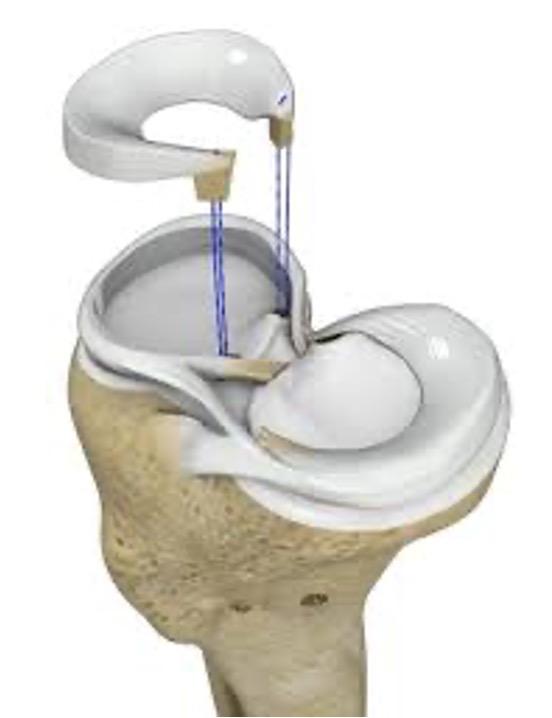
The meniscus acts like the shock-absorbing cushion inside your knee. When a large tear is removed or becomes irreparable, the knee loses this natural protection — leading to pain, swelling, and early cartilage wear. A meniscus allograft transplant replaces the missing meniscus with a size-matched donor meniscus, restoring the smooth “gliding” function of the joint.
Think of it as replacing a missing bearing liner in a machine so the system runs smoothly again.
Who Needs a Meniscus Allograft?
You may be a candidate if you have:
- Persistent knee pain after a previous meniscectomy
- Large or irreparable meniscus tears in young, active individuals
- Early cartilage changes but not advanced arthritis
- Symptoms like catching, swelling, or activity-related pain
- Good knee alignment and stable ligaments
This procedure is often offered to patients who are too young for knee replacement but need long-term protection.
Why Is It Done?
A transplant aims to:
- Restore shock absorption
- Reduce pain from the “bone-on-bone” effect
- Protect cartilage from further damage
- Allow return to sports and active lifestyle
- Delay or prevent early osteoarthritis
The Procedure
- Performed arthroscopically through small keyhole incisions
- A carefully size-matched donor meniscus is prepared
- The graft is fixed securely using sutures and modern fixation techniques
- Normal knee mechanics are restored by recreating the natural shape and tension of the meniscus
Most patients go home after 1-2 days
Recovery and Rehabilitation
- Partial weight-bearing for the initial few weeks
- Physiotherapy begins early for motion and muscle activation
- Full sports return usually 6–9 months depending on healing
- Regular follow-ups ensure smooth recovery
Expected Results
Most patients experience:
High satisfaction and long-term durability of the graftOur team guides you through every step — from surgery to full functional return.
Reduction in pain
Improved joint stability
Better ability to participate in sports and everyday activities
Slowing down of cartilage degeneration
Meniscus Allograft vs Tendon Autograft (Semitendinosus / Peroneus Longus)
Meniscus allograft transplantation uses a size-matched donor meniscus and remains the most established option, with strong long-term evidence for pain relief and cartilage protection. Tendon autografts like semitendinosus or peroneus longus offer a practical alternative when allografts are unavailable or costly, and early results show good symptom relief. Allografts provide tissue that closely mimics native meniscus structure, while autografts rely on tendon remodelling into a “neomeniscus,” with long-term durability still being studied. Donor-site morbidity is minimal with modern autograft harvest, but allografts avoid additional incisions altogether. In clinical practice, allografts remain the benchmark, while autografts are promising for selected young patients when access or affordability is an issue.

Why Choose DocJoints care?
At DocJoints, we specialise in advanced arthroscopic techniques, including:
- Precise sizing using MRI-based matching
- Minimally invasive graft insertion
- Biologic augmentation when required
- Personalised rehabilitation programs
- Transparent counselling with realistic expectations
Your knee deserves the best chance at long-term health — and this procedure is designed exactly for that.
Arthroscopic Latarjet changes life of Violinist

Recent Posts

Sr. Consultant Orthopedic Surgeon, Prof & Head,
Institute of Advanced Orthopedics, MOSC Medical College Hospital, Kolenchery, Kochi, Kerala, India - 682311


