
 Call us:+91-484 2885910 (Reception Orthopedics; 9am to 5pm Mon-Sat), +91-484-2885621 (22,23,24)
Doctor's mobile - +91 9497559755 (whatsApp anytime)
Call us:+91-484 2885910 (Reception Orthopedics; 9am to 5pm Mon-Sat), +91-484-2885621 (22,23,24)
Doctor's mobile - +91 9497559755 (whatsApp anytime)
What is Osgood-Schlatter Disease?
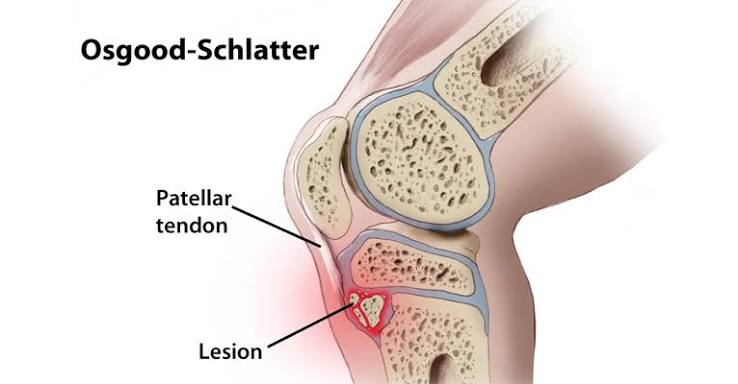
Osgood-Schlatter disease is one of the most common causes of knee pain in growing children and adolescents. It is not a disease in the traditional sense, but an overuse injury affecting the growth plate (apophysis) at the top of the shin bone (tibia), just below the kneecap.
It occurs because the powerful thigh muscles (quadriceps) repeatedly pull on the patellar tendon, which attaches to the developing tibial tubercle. During periods of rapid growth, this area is more vulnerable to stress, leading to pain, swelling, and sometimes a prominent bony bump.
The good news is that it is a self-limiting condition, meaning it usually resolves once skeletal growth is complete.
Who is at Risk?
Osgood-Schlatter disease commonly affects:
- Boys and girls aged 10–15 years
- Children during growth spurts
- Young athletes involved in:
- Football
- Cricket
- Basketball
- Volleyball
- Athletics
- Gymnastics
- Badminton
- Dance
Children who participate in sports several days a week are at greater risk.
Why Does it Happen?
During adolescence:
- Bones grow rapidly.
- Muscles and tendons may become relatively tight.
- Repeated jumping, sprinting, kicking, and squatting place excessive traction on the growth plate.
Over time, this repeated stress causes:
- Inflammation
- Micro-avulsion injuries
- Fragmentation of the tibial tubercle in some children
Symptoms
Children commonly complain of:
- Pain just below the kneecap
- Tenderness over the tibial tubercle
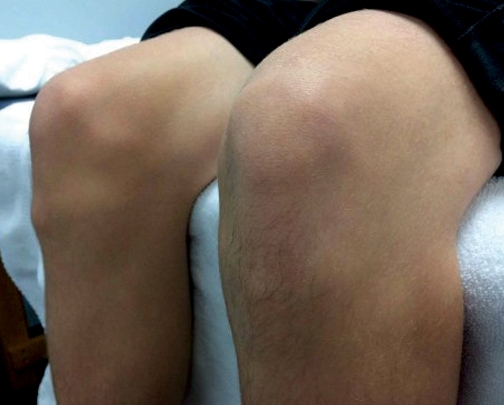
- Swelling over the bony prominence
- Pain while:
- Running
- Jumping
- Climbing stairs
- Kneeling
- Relief with rest
Many children notice that one knee is affected more than the other, although both knees can be involved.
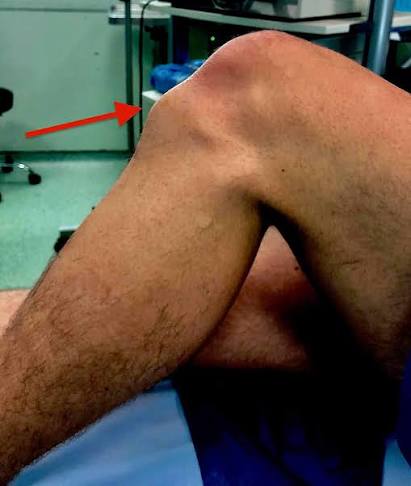
What Does the Doctor Look For?
Clinical examination includes:
- Local tenderness over the tibial tubercle
- Pain while straightening the knee against resistance
- Tight quadriceps and hamstrings
- Swelling over the bump
- Pain reproduced with jumping or squatting
Do I Need an X-ray?
Most children can be diagnosed with a clinical examination alone.
An X-ray may be requested if:
- Pain is unusually severe
- Symptoms are prolonged
- The diagnosis is uncertain
- An avulsion fracture is suspected
Typical X-ray findings include:
- Fragmentation of the tibial tubercle
- Soft tissue swelling
- Prominent tibial tubercle
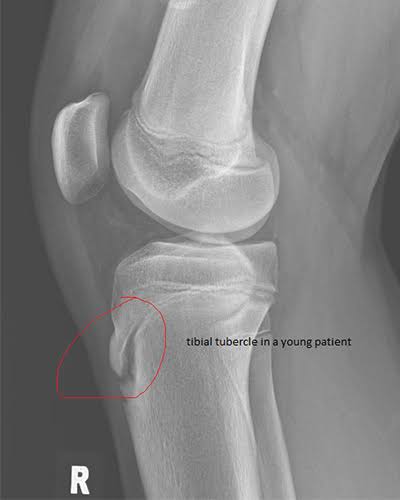
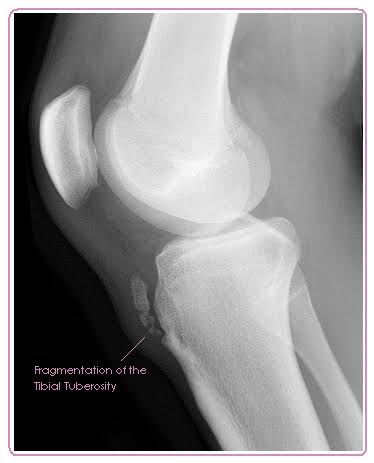
MRI is rarely required unless another condition is suspected.
Treatment
The vast majority of children improve without surgery.
Activity Modification
Children do not need complete bed rest.
Instead:
- Reduce activities that cause pain.
- Avoid excessive jumping and sprinting.
- Cross-training such as swimming or cycling is encouraged.
Pain can be used as a guide—activities causing significant pain should be reduced temporarily.
Ice Therapy
Apply ice:
- 15–20 minutes
- 3–4 times daily
- Especially after sports
Pain Relief
When necessary:
- Paracetamol
- Anti-inflammatory medications (only if advised by your doctor)
These medications help control symptoms but do not speed healing.
Stretching Exercises
Stretching is one of the most important treatments.
Focus on:
- Quadriceps
- Hamstrings
- Calf muscles
- Hip flexors
Better flexibility reduces stress on the growth plate.
Strengthening
Once pain settles:
- Quadriceps strengthening
- Core strengthening
- Hip strengthening
- Balance exercises
These help reduce recurrence.
Patellar Tendon Strap
A patellar tendon strap (infrapatellar strap) may help by:
- Reducing traction on the tibial tubercle
- Allowing comfortable participation in sports
- Decreasing pain during activity
Can My Child Continue Sports?
Usually yes.
The general rule is:
- Mild discomfort is acceptable.
- Severe pain should be avoided.
- If pain causes limping, the child should stop and rest.
Most children return to full sports once symptoms improve.
When is Surgery Needed?
Fortunately, surgery is rarely required.
It is considered only when:
- Pain persists after skeletal maturity
- Symptoms continue despite prolonged conservative treatment
- A painful bone fragment remains
- There is persistent symptomatic fragmentation affecting daily activities or sports
Depending on the condition, surgery may involve:
- Removal of loose bone fragments
- Smoothing of the tibial tubercle
- Repair or fixation of symptomatic fragments in selected cases
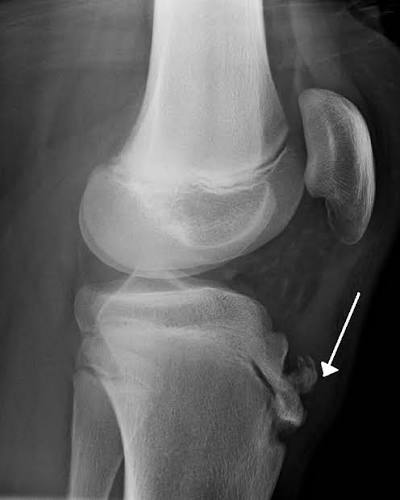
Surgery is generally not recommended while the growth plate is still open, except in uncommon situations such as an acute displaced avulsion fracture.
Recovery
Most children improve over:
- 6–18 months
The bony prominence may remain permanently but usually causes no functional problems.
Most young athletes return to full sports without long-term disability.
Frequently Asked Questions (FAQs)
Is Osgood-Schlatter disease permanent?
No. It usually resolves once growth is complete, although a painless bump may remain.
Can my child continue playing sports?
Yes, as long as pain is mild and does not cause limping or significant discomfort.
Will surgery be required?
More than 90–95% of children recover without surgery.
Can it affect both knees?
Yes. Around 20–30% of children have symptoms in both knees.
Does the bony bump disappear?
The pain usually disappears. The bump often remains but is generally harmless.
Can it come back?
Symptoms may flare up during growth spurts or periods of increased sporting activity but usually settle with rest and rehabilitation.
Is physiotherapy helpful?
Yes. Stretching, strengthening, and correcting muscle tightness are among the most effective treatments.
When Should You Consult an Orthopaedic Surgeon?
Seek medical evaluation if:
- Pain persists despite several weeks of rest
- Swelling becomes significant
- Your child is unable to participate in normal activities
- There is sudden severe pain after a jump or fall
- The knee becomes locked, unstable, or cannot bear weight
- Symptoms continue after growth has finished
Key Takeaways
- Osgood-Schlatter disease is a common overuse injury in growing children.
- It results from repetitive traction on the growth plate below the kneecap.
- Most children recover completely with activity modification, stretching, icing, and strengthening exercises.
- Surgery is rarely needed and is reserved for persistent symptoms after skeletal maturity.
- With proper management, nearly all children return to sports without long-term problems.
Arthroscopic Latarjet changes life of Violinist

Recent Posts

Sr. Consultant Orthopedic Surgeon, Prof & Head,
Institute of Advanced Orthopedics, MOSC Medical College Hospital, Kolenchery, Kochi, Kerala, India - 682311


