
 Call us:+91-484 2885910 (Reception Orthopedics; 9am to 5pm Mon-Sat), +91-484-2885621 (22,23,24)
Doctor's mobile - +91 9497559755 (whatsApp anytime)
Call us:+91-484 2885910 (Reception Orthopedics; 9am to 5pm Mon-Sat), +91-484-2885621 (22,23,24)
Doctor's mobile - +91 9497559755 (whatsApp anytime)
Why Does the Side of My Arm Hurt After Rotator Cuff Surgery?
Pain on the Side of the Arm or Back of the Shoulder After Rotator Cuff Surgery
Understanding Deltoid and Trapezius Muscle Fatigue
Many patients are surprised to experience pain over the outer side of the upper arm or the back of the shoulder after rotator cuff surgery. This is one of the most common concerns during the first few weeks after surgery. Fortunately, in most cases, it is a normal part of recovery rather than a sign that something has gone wrong.
Why Does This Pain Occur?
The shoulder is one of the deepest and most complex joints in the body.
The rotator cuff muscles normally work continuously to keep the ball of the shoulder centred within the socket while you lift your arm.
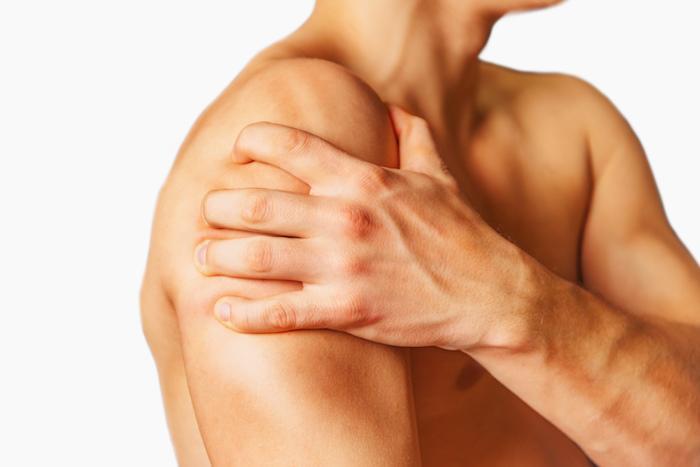
After a rotator cuff tear—or immediately after surgical repair—the repaired tendon is not yet strong enough to perform this function effectively.
As a result, when you try to actively lift your arm, other muscles attempt to compensate.
These include:
- The deltoid muscle on the outer side of the shoulder
- The trapezius muscle over the back of the neck and shoulder
Because these muscles are working much harder than they should, they become fatigued and painful.
Why Does the Pain Occur on the Side of the Arm?
Many patients assume that pain over the outer arm means the repaired tendon has torn again.
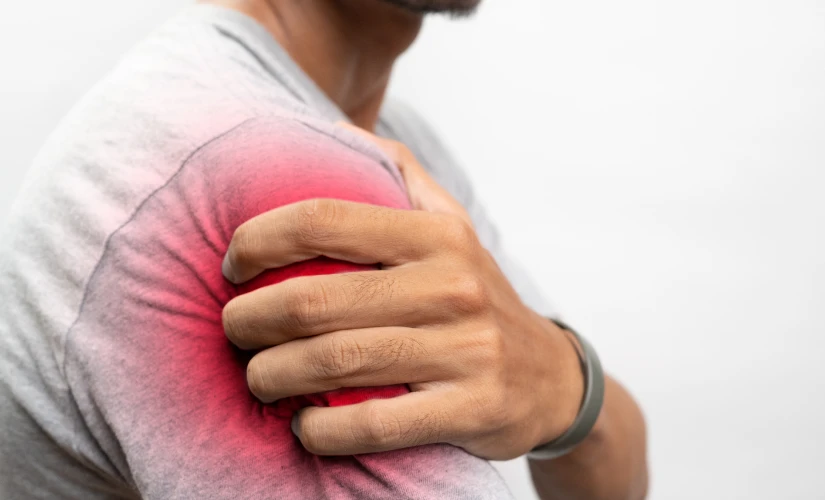
In reality, the discomfort usually comes from the overworked deltoid muscle.
The deltoid contracts strongly in an attempt to lift the arm when the rotator cuff is still healing.
This often causes:
- Pain over the outer upper arm
- Tenderness to touch
- A feeling of muscle tightness
- Occasionally, a temporary bulge or prominence of the muscle during attempted lifting
This does not usually indicate damage to the repair.
Why Does the Back of the Shoulder Hurt?
The trapezius and muscles around the shoulder blade also become overactive.
Patients often shrug their shoulder unconsciously while trying to lift the arm.
This results in:
- Pain around the shoulder blade
- Neck stiffness
- Muscle spasm
- Fatigue after simple activities
Why Is Passive Movement So Important?
During the first 6–12 weeks, your repaired tendon is healing back to bone.
This is the time when the repair is biologically weakest.
Your physiotherapist will therefore encourage:
✅ Passive shoulder movements
instead of
❌ Active lifting of the arm.
Passive exercises allow the shoulder to move without forcing the repaired tendon to work, protecting the repair while preventing stiffness.
Attempting to actively lift the arm too early recruits the deltoid and trapezius, increasing pain and potentially placing unnecessary stress on the healing tendon.
When Will This Pain Improve?
As healing progresses:
- The repaired rotator cuff gradually regains strength.
- The rotator cuff once again centres the shoulder joint.
- The deltoid no longer needs to overcompensate.
- The trapezius relaxes.
- Muscle fatigue gradually disappears.
Most patients notice significant improvement between 6 and 12 weeks, although complete recovery of strength may continue for several months.
Night Pain After Rotator Cuff Surgery
Difficulty sleeping is one of the most common challenges after surgery.
Several factors contribute:
- Healing of the repaired tendon
- Muscle fatigue
- Mild inflammation
- Difficulty finding a comfortable sleeping position
- Reduced shoulder movement causing muscle stiffness
Night pain is usually most noticeable during the first 6–12 weeks and gradually settles as healing progresses.
Sleeping in a slightly reclined position or supporting the operated arm with pillows often improves comfort.
What Can You Do to Reduce This Pain?
Follow your rehabilitation protocol carefully
Avoid lifting your arm actively until your surgeon or physiotherapist advises.
Perform passive exercises regularly
Gentle passive movements reduce stiffness while protecting the repair.
Use your sling correctly
The sling supports the healing tendon and allows the surrounding muscles to relax.
Apply ice packs
Ice for 15–20 minutes several times a day helps reduce muscle soreness.
Sleep with proper support
Use pillows to support the operated arm and avoid lying directly on the operated shoulder.
Be patient
Healing of the tendon takes time. Muscle fatigue improves naturally as the rotator cuff regains its function.
When Should You Contact Your Surgeon?
Seek medical advice if you experience:
- Sudden severe pain after a fall or injury
- A sudden loss of shoulder movement after previously improving
- Fever or wound redness
- Increasing swelling
- Persistent pain that continues to worsen rather than gradually improve
Frequently Asked Questions
Does pain on the side of the arm mean my tendon has torn again?
Usually no. The most common cause is temporary overuse of the deltoid muscle while the rotator cuff is healing.
Is it normal to have pain at night?
Yes. Night discomfort is common during the first 6–12 weeks after rotator cuff surgery.
Why does my shoulder blade hurt?
The trapezius and shoulder blade muscles work harder to compensate for the healing rotator cuff, leading to temporary muscle fatigue.
Should I continue my exercises if they cause mild muscle soreness?
Mild soreness after physiotherapy is expected. However, severe or persistent pain should be discussed with your physiotherapist or surgeon.
How long does it take for these pains to disappear?
Most patients experience gradual improvement over the first 6–12 weeks, with continued gains in strength and comfort over the following months.
Key Message
Pain on the outer side of the arm or back of the shoulder during the early weeks after rotator cuff surgery is usually caused by temporary overworking of the deltoid and trapezius muscles—not by failure of the repair. Following your rehabilitation programme carefully, avoiding early active lifting, and allowing the tendon time to heal are the keys to a successful recovery.
Arthroscopic Latarjet changes life of Violinist

Recent Posts

Sr. Consultant Orthopedic Surgeon, Prof & Head,
Institute of Advanced Orthopedics, MOSC Medical College Hospital, Kolenchery, Kochi, Kerala, India - 682311


