
 Call us:+91-484 2885910 (Reception Orthopedics; 9am to 5pm Mon-Sat), +91-484-2885621 (22,23,24)
Doctor's mobile - +91 9497559755 (whatsApp anytime)
Call us:+91-484 2885910 (Reception Orthopedics; 9am to 5pm Mon-Sat), +91-484-2885621 (22,23,24)
Doctor's mobile - +91 9497559755 (whatsApp anytime)
Understanding Partial Tears of the Supraspinatus Tendon
A partial rotator cuff tear is one of the most common causes of persistent shoulder pain in adults. Unlike a complete tear, only part of the tendon is damaged while the remaining fibres continue to function. Many patients assume that a partial tear inevitably requires surgery, but this is not true. The treatment depends on the depth of the tear, symptoms, functional demands, and response to rehabilitation.
What is a Partial Rotator Cuff Tear?
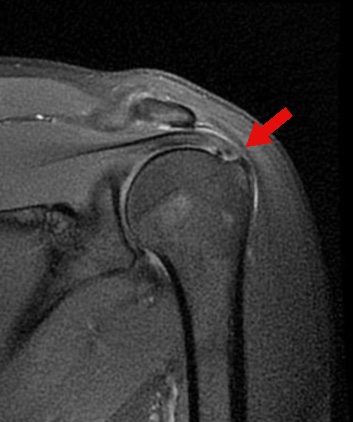
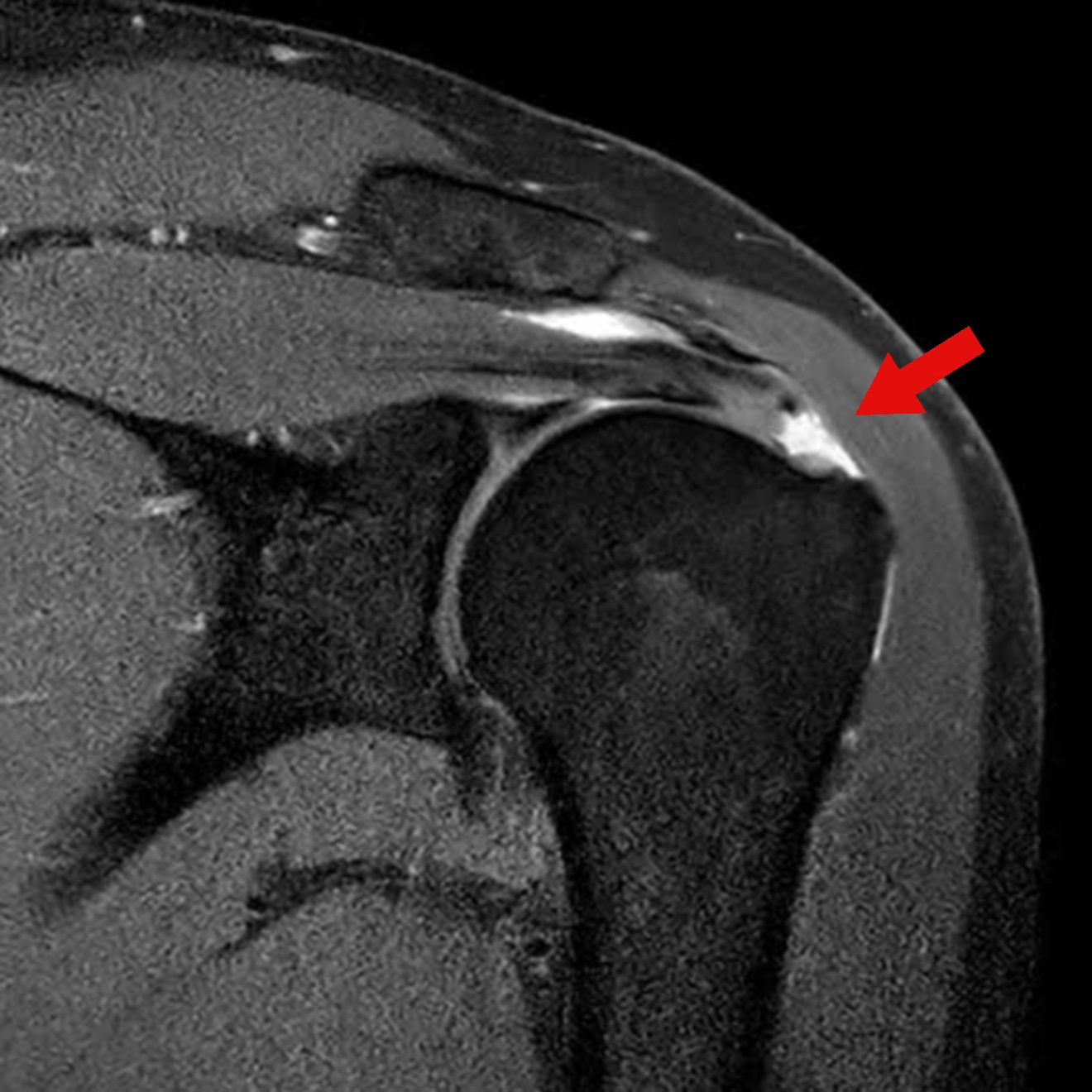
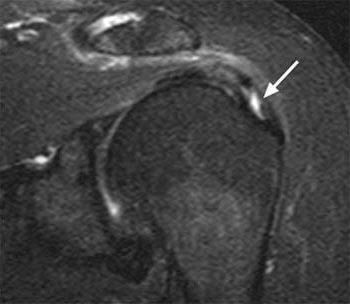
The supraspinatus tendon is the tendon most commonly affected. Instead of tearing completely away from the bone, only part of the tendon fibres become damaged.
Partial tears may occur:
- On the undersurface (articular side) of the tendon [PASTA lesion – Partial Articular Surface Tendon Avulsion]
- On the outer (bursal) surface
- Within the substance of the tendon itself (interstitial tear)
Among these, undersurface tears are by far the most common.
Tendinitis and Partial Tears Often Overlap
Many patients do not have a clear distinction between tendinitis and a partial tear.
The tendon usually progresses through stages:
- Tendon overload
- Tendinitis (tendinopathy)
- Microscopic fibre disruption
- Partial-thickness tear
- Progressive enlargement
- Full-thickness tear
This is why patients with long-standing supraspinatus tendinitis often have small undersurface tears on MRI. Likewise, patients with partial tears frequently continue to have features of tendinitis in the remaining intact tendon.
These conditions should therefore be viewed as a continuum rather than separate diseases.
Understanding the Five-Layer Structure of the Supraspinatus
The supraspinatus tendon is not a single sheet of tissue. It consists of multiple histological layers, each contributing differently to shoulder function.
The deeper layers, particularly those adjacent to the joint, contain fibres that play a critical role in:
- Centreing the humeral head
- Providing shoulder stability
- Maintaining balanced force couples
- Initiating arm elevation
When these deeper fibres begin to fail, patients often notice weakness before a complete tear develops.
This explains why even relatively small undersurface tears can produce significant symptoms.
Arthroscopic Latarjet changes life of Violinist

Recent Posts

Sr. Consultant Orthopedic Surgeon, Prof & Head,
Institute of Advanced Orthopedics, MOSC Medical College Hospital, Kolenchery, Kochi, Kerala, India - 682311


