
 Call us:+91-484 2885910 (Reception Orthopedics; 9am to 5pm Mon-Sat), +91-484-2885621 (22,23,24)
Doctor's mobile - +91 9497559755 (whatsApp anytime)
Call us:+91-484 2885910 (Reception Orthopedics; 9am to 5pm Mon-Sat), +91-484-2885621 (22,23,24)
Doctor's mobile - +91 9497559755 (whatsApp anytime)
Understanding Autograft, Allograft and Synthetic Ligament Options
When the Anterior Cruciate Ligament (ACL) is completely torn, it usually does not heal back to its normal attachment. In young and active individuals with instability, ACL reconstruction may therefore be required.
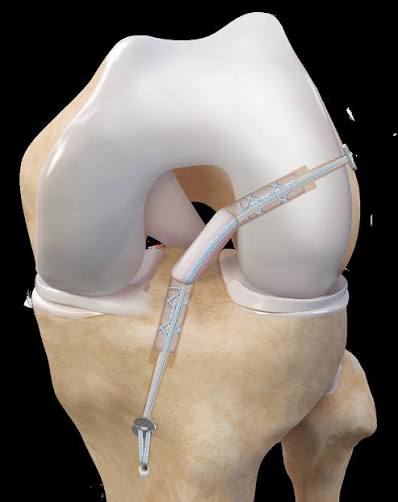
During ACL reconstruction, the torn ligament is replaced by another piece of tissue called a graft.
One of the most common questions patients ask is:
“Which graft is best for my ACL?”
There is no single graft that is ideal for everyone. Age, sporting activity, occupation, anatomy, associated injuries and expectations all influence graft selection.
For a young athlete who wants to return to football, basketball, badminton or other pivoting sports, the reconstructed ACL may need to withstand repetitive loading for several decades.
Therefore, graft selection should focus not merely on the easiest operation or quickest early recovery, but on biological healing, stability, durability and long-term function.
What Are the Options for ACL Reconstruction?
ACL grafts can broadly be divided into three groups:
1. Autograft
A tendon taken from another part of your own body.
Common options are:
- Hamstring tendon
- Quadriceps tendon
- Bone–Patellar Tendon–Bone (BPTB)
- Peroneus longus tendon
2. Allograft
Human tendon obtained from a screened tissue donor.
3. Synthetic Ligament
A manufactured artificial ligament, such as modern synthetic ACL implants.
Each has advantages and disadvantages.
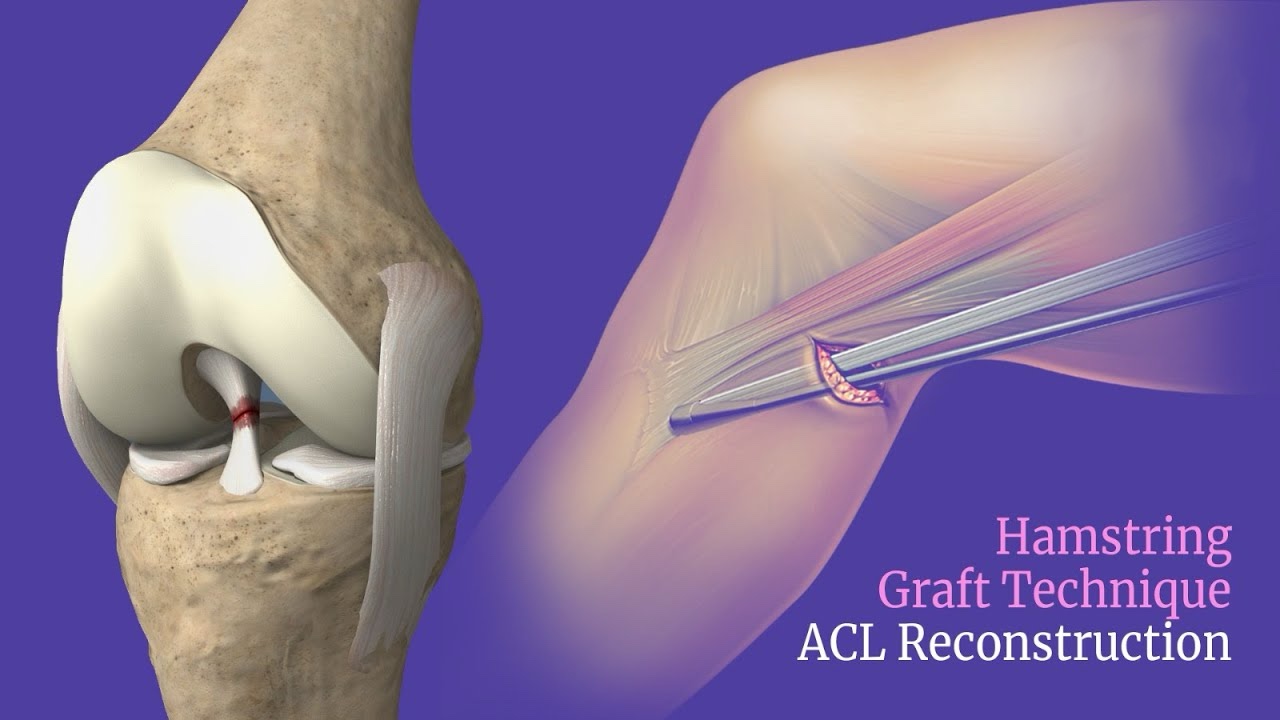
1. Hamstring Tendon Autograft
The hamstring tendon has been one of the most commonly used ACL grafts worldwide.
Usually the semitendinosus tendon, sometimes together with the gracilis, is harvested through a small incision and folded to produce a strong multi-strand graft.
Advantages
- Excellent clinical results
- Extensive long-term experience
- Strong biological graft
- Small incision
- Relatively little anterior knee pain
- Less discomfort while kneeling compared with patellar tendon graft
- Suitable for many sporting individuals
Disadvantages
- Temporary hamstring weakness
- Graft diameter can occasionally be smaller than desired
- Tendon-to-bone healing is required
- Hamstring strength may be particularly important for certain athletes
Who Is It Suitable For?
Hamstring autograft remains an excellent option for many young and active patients undergoing primary ACL reconstruction.
2. Quadriceps Tendon Autograft
The quadriceps tendon is the thick tendon immediately above the kneecap.
It has become increasingly popular for ACL reconstruction because it provides a large and predictable graft.
It can be harvested entirely as soft tissue or together with a small bone block.
Advantages
- Thick and strong graft
- Predictable graft diameter
- Large amount of collagen tissue
- Excellent option for athletic patients
- Useful in revision ACL reconstruction
- Preserves the hamstrings
- Generally less kneeling pain than BPTB graft
Disadvantages
- Temporary quadriceps weakness
- Harvest-site discomfort
- Rehabilitation needs particular attention to quadriceps recovery
- Although evidence is now substantial, historical follow-up is not as extensive as for hamstring and BPTB grafts
Who Is It Suitable For?
Quadriceps tendon is particularly attractive for:
- Young athletes
- Larger individuals requiring a substantial graft
- Patients in whom hamstring preservation is desirable
- Revision ACL reconstruction
3. Bone–Patellar Tendon–Bone (BPTB) Autograft
The middle portion of the patellar tendon is harvested together with a small piece of bone from the kneecap and tibia.
It has been used for ACL reconstruction for several decades and remains an important benchmark graft.
Advantages
- Excellent initial fixation
- Bone-to-bone healing
- Excellent stability
- Extensive long-term evidence
- Low failure rates in appropriately selected patients
- Particularly attractive for high-demand pivoting athletes
Disadvantages
The principal disadvantage is donor-site morbidity.
Some patients develop:
- Pain at the front of the knee
- Pain while kneeling
- Patellar tendon discomfort
- Temporary quadriceps weakness
Rare complications include patellar fracture or patellar tendon injury.
Who Is It Suitable For?
BPTB remains an excellent choice for young, highly competitive athletes, particularly in sports involving cutting, jumping and pivoting.
It may be less desirable for patients whose occupation or lifestyle involves frequent kneeling.
4. Peroneus Longus Tendon Autograft
The peroneus longus is a tendon running along the outer side of the lower leg and ankle. A portion of this tendon can be harvested and used as an ACL graft.
It provides another useful biological graft option.
Advantages
- Good graft length
- Usually good graft diameter
- Avoids hamstring harvest
- Avoids anterior knee donor-site morbidity
- Can be useful when other grafts are unavailable
- Useful in selected revision procedures
Disadvantages
The peroneus longus contributes to ankle and foot function.
Potential concerns include changes in:
- Ankle strength
- Foot eversion
- Plantar flexion
- Balance
Studies generally report satisfactory ankle function after harvesting, but long-term evidence is less extensive than for hamstring and patellar tendon grafts.
Who Is It Suitable For?
It is a useful alternative when conventional autografts are unsuitable, have previously been harvested, or when preservation of the hamstrings and extensor mechanism is desirable.
5. Allograft – Donor Tendon
An allograft is real human tendon obtained from a screened tissue donor rather than from the patient’s own body.
Common allografts include:
- Tibialis anterior tendon
- Tibialis posterior tendon
- Achilles tendon
- Patellar tendon
- Hamstring tendon
- Quadriceps tendon
Advantages
The major attraction is that no tendon needs to be harvested from the patient.
This means:
- No graft-harvest pain
- No hamstring or quadriceps weakness from harvesting
- Smaller surgical exposure
- Shorter operating time
- Availability of additional graft tissue
- Particularly useful when multiple ligaments need reconstruction
Disadvantages
Allografts undergo biological incorporation and remodelling after implantation, and this process may be slower than with an autograft.
Other considerations include:
- Higher failure rates reported in young, highly active patients
- Graft quality may vary
- Processing techniques can affect graft strength
- Very small risk of disease transmission despite stringent screening
- Cost and availability
Why Does Processing Matter?
Not all allografts are identical.
Factors such as:
- Donor age
- Type of tendon
- Storage
- Sterilisation
- Irradiation
- Graft diameter
can influence graft characteristics.
Higher-dose irradiation, in particular, can adversely affect the mechanical properties of donor tendon.
When Is an Allograft Particularly Useful?
Allografts can be valuable in:
- Older or lower-demand patients
- Revision ACL reconstruction
- Multiple-ligament knee injuries
- Patients requiring several grafts
- Patients whose usual autograft options have already been used
For a young competitive athlete undergoing primary ACL reconstruction, we generally prefer an autograft because of concerns regarding higher allograft failure rates in this population.
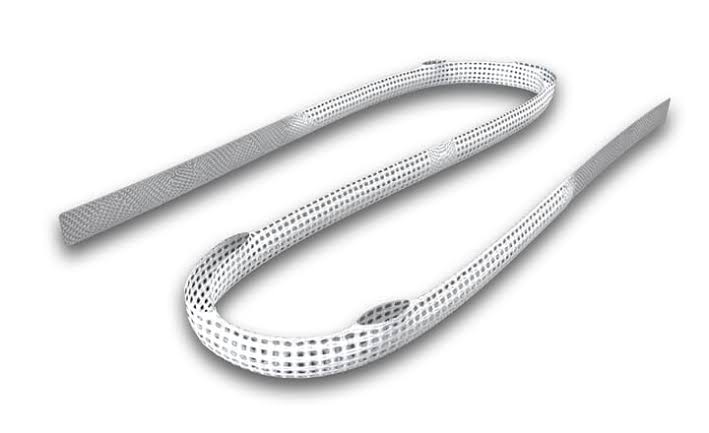
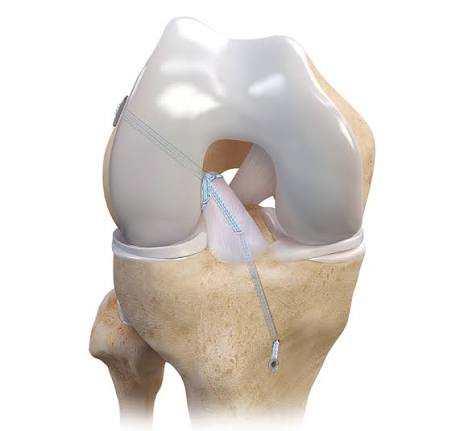
6. Synthetic ACL Ligaments
The concept of replacing the ACL with an artificial ligament is attractive.
Unlike an autograft, no tendon needs to be harvested.
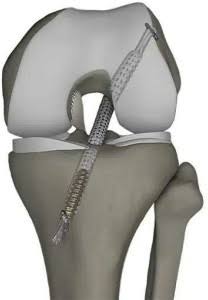
Modern examples include synthetic ligament systems such as JewelACL.
Why Are Synthetic Ligaments Attractive?
Potential advantages include:
- No graft harvesting
- No donor-site pain
- No loss of hamstring or quadriceps tendon
- Immediately available graft
- Predictable graft dimensions
- Potentially shorter operation
- Possibility of faster early rehabilitation in selected protocols
Understandably, these advantages can be attractive to both patients and surgeons.
However, ACL reconstruction should not be judged only by the first few weeks after surgery.
What About the Long-Term Durability of Synthetic Ligaments?
This is particularly important in young patients.
A reconstructed ACL in a 20-year-old athlete may need to function for another 40 or 50 years.
During that period, it will undergo millions of cycles of:
- Running
- Jumping
- Landing
- Cutting
- Pivoting
- Everyday activity
Autografts are biological tissues that undergo incorporation and remodelling within the knee.
A synthetic ligament behaves differently.
Modern synthetic ligaments have improved substantially and some have shown encouraging short- and medium-term results. However, the depth of long-term evidence for newer synthetic devices is not equivalent to the decades of experience available for established autografts.
For this reason, we remain cautious about choosing a purely synthetic ligament as the first option for a young, high-demand athlete when proven biological autograft options are available.
Haven’t Synthetic ACL Ligaments Been Used Before?
Yes.
Artificial ACL ligaments have been tried for several decades.
Some earlier generations eventually developed problems including:
- Mechanical failure
- Stretching
- Rupture
- Wear particles
- Persistent joint swelling
- Synovitis
- Osteolysis
Modern synthetic materials and manufacturing techniques are considerably different, and newer implants should not automatically be assumed to behave like older devices.
Nevertheless, the history of synthetic ACL reconstruction provides an important lesson:
Good early results do not necessarily guarantee durability over several decades.
Long-term follow-up remains particularly important when considering synthetic implants for young patients.
Synthetic Augmentation Is Not the Same as a Synthetic ACL
There is another important distinction.
A surgeon may use:
A completely synthetic ligament
or
A biological autograft reinforced with synthetic material
These are different procedures.
In augmentation techniques, the patient’s biological tendon remains the principal graft while synthetic material provides additional initial support.
The biological behaviour and long-term implications are therefore different from using a purely synthetic ligament as the ACL substitute.
How Do the Different ACL Grafts Compare?
| Graft | Main Advantage | Main Disadvantage | Long-term Experience |
|---|---|---|---|
| Hamstring | Proven biological graft, small incision | Hamstring weakness, variable diameter | Excellent |
| Quadriceps | Thick, predictable graft | Temporary quadriceps weakness | Good and increasing |
| BPTB | Bone-to-bone healing, excellent stability | Anterior knee/kneeling pain | Excellent |
| Peroneus longus | Good graft without disturbing knee tendons | Potential ankle donor-site effects | More limited |
| Allograft | No graft harvest | Slower incorporation; higher failure concern in young athletes | Extensive but patient-dependent |
| Synthetic ligament | No harvest, immediate availability | Long-term durability dependent on implant; less long-term evidence for newer devices | Variable |
So Which Is the Best ACL Graft?
There is no single best graft for every patient.
Graft choice should consider:
- Patient’s age
- Type of sport
- Competitive level
- Occupation
- Previous ACL surgery
- Tendon size and quality
- Associated ligament injuries
- Need to kneel for work
- Patient expectations
- Surgeon experience
For the Young Athlete: Think Long Term
A young athlete may naturally be attracted to an option promising:
Less pain, no tendon harvest and quicker early recovery.
These are genuine advantages.
But the more important question is:
Which graft gives this knee the best opportunity to remain stable and functional for decades?
A 20-year-old undergoing ACL reconstruction does not need the reconstructed ligament merely for the next football season.
He or she may need it for the next 40–50 years.
For young, athletic individuals, we therefore generally favour a well-selected autograft with established biological incorporation and long-term clinical experience.
The inconvenience of temporary donor-site pain or weakness should be balanced against the lifetime expected from the reconstruction.
The Graft Is Only One Part of a Successful ACL Reconstruction
Choosing the right graft is important, but successful ACL surgery depends on much more.
Important factors include:
- Accurate tunnel positioning
- Appropriate graft diameter
- Secure fixation
- Recognition and treatment of meniscus tears
- Treatment of associated cartilage injuries
- Recognition of additional ligament instability
- Appropriate rehabilitation
- Restoration of quadriceps and hamstring strength
- Neuromuscular and balance training
- Objective return-to-sport testing
Even the strongest graft can fail if the reconstruction is poorly performed or the patient returns to pivoting sport before the knee is ready.
Frequently Asked Questions
Which ACL graft is the strongest?
There is no meaningful single answer based purely on laboratory tensile strength. Hamstring, quadriceps and BPTB autografts can all provide excellent ACL reconstruction.
Clinical durability, biological incorporation, fixation, surgical technique and rehabilitation are more important than simply comparing the breaking strength of different tendons.
Which graft is best for a young football or basketball player?
For a young athlete involved in pivoting sports, an autograft is generally preferred.
BPTB, quadriceps tendon and appropriately sized hamstring grafts are all excellent options. The final choice should be individualized.
Which ACL graft heals fastest?
Bone-to-bone incorporation is one of the advantages of a BPTB graft.
Soft-tissue grafts such as hamstring and quadriceps tendon also incorporate reliably but heal differently within the bone tunnels.
Return to sport should never be decided solely on the basis of presumed graft healing time.
Will removing my hamstring cause permanent weakness?
Some reduction in hamstring strength occurs following harvest, particularly during the early recovery period. Most patients recover excellent functional strength with appropriate rehabilitation.
For athletes in whom maximal hamstring function is particularly important, another graft may be considered.
Does taking the quadriceps tendon weaken the knee?
There is usually temporary quadriceps weakness following surgery. Appropriate rehabilitation is therefore important.
Most patients regain excellent function, and quadriceps tendon has become an increasingly popular ACL graft.
Why do some athletes prefer a patellar tendon graft?
BPTB has excellent fixation, bone-to-bone healing and extensive long-term evidence. It remains particularly popular in high-demand athletes.
Its main drawback is the greater incidence of anterior knee and kneeling pain.
Is peroneus longus a good ACL graft?
It can provide a strong graft of good diameter and is a useful alternative in selected patients.
However, because it is harvested from the ankle and has less extensive long-term ACL evidence than traditional grafts, we generally consider it according to individual circumstances rather than as the universal first choice.
Is an allograft the same as an artificial ligament?
No.
Allograft = real human donor tendon.
Synthetic graft = manufactured artificial material.
They are fundamentally different.
Can my body reject an allograft?
Allograft tendon does not behave like an organ transplant. Patients do not normally require anti-rejection medication.
The graft gradually undergoes biological incorporation within the knee.
Why not use an allograft for every patient and avoid tendon harvesting?
Avoiding graft harvest is attractive. However, allografts have demonstrated higher failure rates in young, highly active populations.
They can nevertheless be excellent grafts for appropriately selected older patients, revision surgery and multiligament reconstruction.
Is a synthetic ACL better because there is no graft-site pain?
Not necessarily.
Avoiding donor-site morbidity is an important advantage, but it is only one consideration.
For a young athlete, we must also ask how the reconstruction is likely to perform after 10, 20 or 30 years.
Newer synthetic ligaments have promising features, but long-term evidence should be considered before choosing them over established biological autografts.
Is JewelACL a bad option?
No graft should simply be labelled good or bad.
Modern synthetic ligaments such as JewelACL offer interesting advantages, particularly the avoidance of tendon harvest and immediate availability.
The important issue is patient selection. For a young, high-demand athlete, we would be cautious about replacing an established biological autograft with a purely synthetic ligament until comparable long-term durability is demonstrated.
Can an ACL graft tear again?
Yes.
No graft is indestructible. A reconstructed ACL can rupture following another significant twisting injury.
The risk is influenced by:
- Age
- Sporting activity
- Surgical technique
- Rehabilitation
- Muscle strength
- Neuromuscular control
- Timing of return to sport
Young athletes participating in pivoting sports have the greatest reinjury risk.
When can I return to sport after ACL reconstruction?
Return to sport should not be based simply on the number of months following surgery.
The knee should demonstrate:
- Full movement
- No significant swelling
- Good quadriceps and hamstring strength
- Good balance and neuromuscular control
- Satisfactory hopping and functional tests
- Psychological confidence
- Appropriate graft maturation
Your surgeon and rehabilitation team should make this decision together.
Our Philosophy at DocJoints
The purpose of ACL reconstruction is not simply to replace a torn ligament.
Our goal is to provide a stable, confident and durable knee that allows the patient to return safely to work, recreation and sport.
Modern technology continues to introduce new grafts and synthetic materials, and some may prove to have important roles in ACL surgery. However, new technology should be evaluated alongside established biological options and long-term clinical evidence.
For a young athletic patient, our philosophy is simple:
Choose the graft for the knee you want 20 years from now—not merely for the easiest recovery over the next 20 days.
Graft selection at DocJoints is therefore individualized according to the patient’s age, sport, anatomy, activity level and long-term goals.
Arthroscopic Latarjet changes life of Violinist

Recent Posts

Sr. Consultant Orthopedic Surgeon, Prof & Head,
Institute of Advanced Orthopedics, MOSC Medical College Hospital, Kolenchery, Kochi, Kerala, India - 682311


